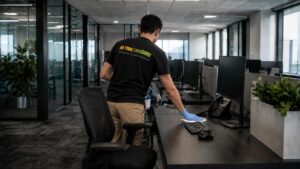
Technology alone does not keep workplaces clean. When smart systems support experienced cleaners, businesses get safer spaces, clearer standards and results they can rely on.
Key Takeaway
- Technology in commercial cleaning improves consistency when it supports skilled cleaners.
- Automation and data-led systems help offices clean smarter, not harder.
- Sustainable cleaning methods now protect both people and compliance.
- The right office cleaning partner delivers better results than any single piece of technology.
Commercial cleaning has always been one of those services you only notice when it slips. A tired-smelling meeting room. Floors that look clean but feel sticky. Bathrooms that never quite reset.
Across Australia, expectations have shifted. Offices are busier on some days and quieter on others. Hybrid work has changed how spaces are used, and businesses are under more pressure to demonstrate hygiene standards, not just assume them.
Technology has stepped in to support that change. Not to replace cleaners, but to help experienced teams deliver consistent results across complex workplaces.
Why Commercial Cleaning Is Evolving
Australian workplaces are more demanding than they were a decade ago. Offices run longer hours. Shared areas see heavier foot traffic. Health, safety and sustainability expectations are higher, and rightly so.
Many organisations reviewing their commercial cleaning arrangements are now looking for clearer reporting, safer products and more flexibility around how and when cleaning happens.
Traditional cleaning methods still matter, but they struggle on their own in large or high-use environments. Technology fills those gaps by improving consistency, visibility and efficiency.
Smarter Cleaning Through Automation
Where Autonomous Equipment Actually Works
Robotic scrubbers and vacuums are no longer novelties. In the right environment, they quietly handle repetitive floor cleaning with steady, predictable results.
They work best in:
- Large open-plan offices
- Warehouses and logistics facilities
- Shopping centres and transport hubs
- Factory floors with consistent layouts
They are far less effective in tight or cluttered spaces, detailed cleaning tasks, and high-touch areas like kitchens and bathrooms.
In practice, automation works best when paired with experienced cleaners. Machines manage the heavy floor work, while people focus on touchpoints, judgment calls and areas that need human attention. This is the same approach used in well-managed office cleaning services, where consistency matters more than speed.

Cleaning That Responds to Real Use
Data-Led Scheduling and Sensors
One of the most practical shifts in commercial cleaning is moving away from rigid schedules.
Instead of cleaning every area the same way every day, data-led systems respond to how spaces are actually used. This can include washroom sensors that flag high use or low supplies, traffic data that highlights busy areas, and digital cleaning logs that show when tasks were completed.
This approach is especially useful in workplaces with flexible attendance, something many businesses now factor into their office cleaning plans.
The benefit is simple. Effort goes where it is needed most, improving hygiene while reducing wasted time.
Disinfection Technology Without the Gimmicks
UV-C and Electrostatic Spraying
Advanced disinfection gained attention during the pandemic and has since found a more balanced role.
UV-C disinfection can be useful in controlled settings such as meeting rooms outside operating hours, healthcare environments, and restrooms that require periodic deep sanitisation.
Electrostatic spraying helps evenly coat surfaces in large areas where manual wiping alone would be slow or inconsistent.
These tools do not replace routine cleaning. They are targeted solutions used when risk is higher or additional reassurance is required.
Sustainability Is Now Part of Cleaning Quality
Safer Products and Smarter Systems
Sustainable cleaning is no longer optional for many Australian workplaces. It plays a role in compliance, staff wellbeing and long-term site safety.
Common improvements include:
- Microfibre systems that reduce chemical and water use
- Low-toxicity or plant-based cleaning products
- Equipment designed to minimise water and energy consumption
- Controlled dosing systems that prevent overuse
These measures are now standard practice in many modern office cleaning environments, not add-ons. Guidance from Safe Work Australia on hazardous chemicals reinforces why reducing chemical exposure in cleaning is essential for workplace safety.

Why Experience Still Matters More Than Technology
The Limits of Automation
Every experienced cleaner knows that no two sites behave the same way. An office after a client-heavy week. A kitchen after a staff event. A building during flu season.
Technology cannot detect early signs of maintenance issues, respond to unusual mess or odours, or adjust priorities in real time.
This is why the strongest outcomes come from blending technology with trained cleaners who understand the site and its risks. It is also why many businesses prefer working with specialist office cleaning providers rather than generic services.
Choosing the Right Technology for Your Workplace
Not every workplace benefits from every innovation. The key is choosing tools that suit your environment, not chasing trends.
A Practical Decision Framework
- Understand your space, including layout, foot traffic and hygiene requirements
- Identify recurring issues such as inconsistent results or high-complaint areas
- Match tools to outcomes, from automation to data-led scheduling
- Support everything with trained cleaners and clear accountability
This framework mirrors how experienced commercial cleaning teams assess and manage sites over time.
Measuring Whether Cleaning Is Actually Working
One common challenge for businesses is knowing whether their cleaning system is effective.
Clear indicators include fewer complaints over time, consistent audit results, digital cleaning records, and a clean presentation during peak usage rather than only after cleaning.
Technology makes these indicators easier to track, but experience is still required to interpret results and adjust processes.
What This Means for Office Cleaning
In modern offices, the goal is not visible machinery or flashy systems. It is clean, safe spaces that feel well cared for without disrupting work.
A professional approach to office cleaning that combines experienced staff with smart technology delivers:
- Consistent daily standards
- Flexible cleaning aligned with occupancy
- Safer products and processes
- Clear reporting and accountability
Many Australian businesses find that working with a dedicated office cleaning specialist leads to better long-term outcomes. NTFG’s office cleaning services are designed around this balance of technology, experience and reliability, supporting workplaces that need results they can trust
Final Thoughts
Commercial cleaning technology has matured. It is no longer about replacing people or showing off equipment. It is about supporting skilled cleaners with better tools, smarter systems and safer products.
The workplaces seeing the strongest results focus on outcomes, not gimmicks. They choose cleaning partners who understand how technology and experience work together in real environments. If you are reviewing how your office is cleaned, NTFG’s office cleaning services offer a practical, reliable approach built around consistency, safety and long-term results.