A clean office is not just about looking tidy. It is a daily signal that workplace hygiene, staff comfort, and professional standards are being taken seriously.
Key Takeaway
- A proper office deep clean goes well beyond emptying bins and giving desks a quick wipe.
- High-touch points, shared kitchens, washrooms and workstations need a clear cleaning routine.
- The right office cleaning checklist should separate daily, weekly and periodic tasks.
- After-hours office cleaning is often the cleanest way to get the job done without annoying the whole team.
Most offices look clean enough at first glance. Chairs pushed in, bins changed, floors vacuumed, maybe even a faint lemony smell floating around. Lovely. But look a bit closer, and the story can change quickly. Dust sitting on vents. Crumbs under keyboards. A microwave with a personality. Fingerprints on glass doors. That odd smell near the bins that everyone pretends not to notice.
I’ve always believed cleaning is not just about making a place look presentable. It is about making the space feel cared for. Staff notice it. Clients notice it. And, more importantly, the little hidden jobs do not pile up until the office starts to feel tired, grubby, or neglected.
So, if you are wondering how to deep clean an office, here is a practical way to do it without turning the whole workplace upside down.
What Does Office Cleaning Include?
A standard office clean usually covers the everyday jobs. Bins are emptied, floors are vacuumed or mopped, bathrooms are cleaned, kitchen benches are wiped, and desks are tidied around.
A deep clean goes further. It gets into the areas that slowly collect dust, grime, bacteria, food residue and general office life.
A proper deep office clean can include:
- detailed desk and workstation cleaning
- keyboard, mouse, phone and chair touchpoint cleaning
- kitchen appliance cleaning, including microwave and fridge handles
- washroom sanitising and restocking
- high-touch point disinfection
- skirting board, ledge and vent dusting
- glass, partition and internal window cleaning
- carpet edge vacuuming and spot cleaning
- rubbish area cleaning and deodorising
- under-desk and behind-furniture cleaning
Safe Work Australia explains that cleaning physically removes contamination from surfaces, while disinfecting uses chemicals to kill germs. It also notes that surfaces should be cleaned before disinfecting, because dirt and grime can reduce how well disinfectants work. That is one of those simple steps that makes a big difference. No point spraying disinfectant over old dust and calling it a day. Safe Work Australia workplace cleaning guidance
Office Cleaning Checklist by Area
A good office cleaning checklist keeps the job organised. Without one, people tend to clean what they can see and forget what everyone actually touches.
| Office Area | What to Clean | Why It Matters |
| Workstations | Desks, keyboards, mice, phones, chair arms, drawer handles | These are daily contact points and collect dust, crumbs and oils |
| Shared kitchen | Benches, taps, fridge, microwave, kettle, coffee machine, bins | Food areas can become unhygienic quickly if not managed |
| Washrooms | Toilets, basins, taps, mirrors, dispensers, floors, door handles | Clean bathrooms affect hygiene, comfort and workplace morale |
| Meeting rooms | Tables, chairs, remotes, screens, glass, switches | These rooms are often shared by staff, clients and visitors |
| Reception | Entry glass, counters, chairs, mats, touchpoints | First impressions start before anyone says hello |
| Floors and carpets | Walkways, edges, under desks, stains, hard floors | Floors hold dust, grit and tracked-in dirt |
| Air points | Vents, grilles, fans and surrounding surfaces | Dusty air points can affect how fresh the office feels |
At NTFG, our office cleaning in Sydney is built around structured cleaning checklists, high-touch point cleaning, kitchen and washroom care, floor maintenance, rubbish removal and flexible scheduling, including after-hours options. That is exactly the sort of structure an office needs when “just give it a quick once-over” is no longer cutting it.
How to Deep Clean an Office Step by Step
1. Start With Decluttering
Before the actual cleaning starts, clear the space. Move loose paperwork, cups, food containers, boxes and personal items. Staff should be given notice before a deep clean so they can secure documents and tidy their own workstations.
This is also when you find the mystery charger, three dead pens and a coffee cup that has quietly become part of the furniture. Happens everywhere.
2. Work From Top to Bottom
Dust falls, so start high. Clean shelves, tops of cupboards, doorframes, ledges, vents and light fittings before desks and floors.
Use microfibre cloths where possible, and avoid dry dusting if it just moves particles around. The aim is to remove dust, not relocate it like a bad tenant.
3. Clean Workstations With Care
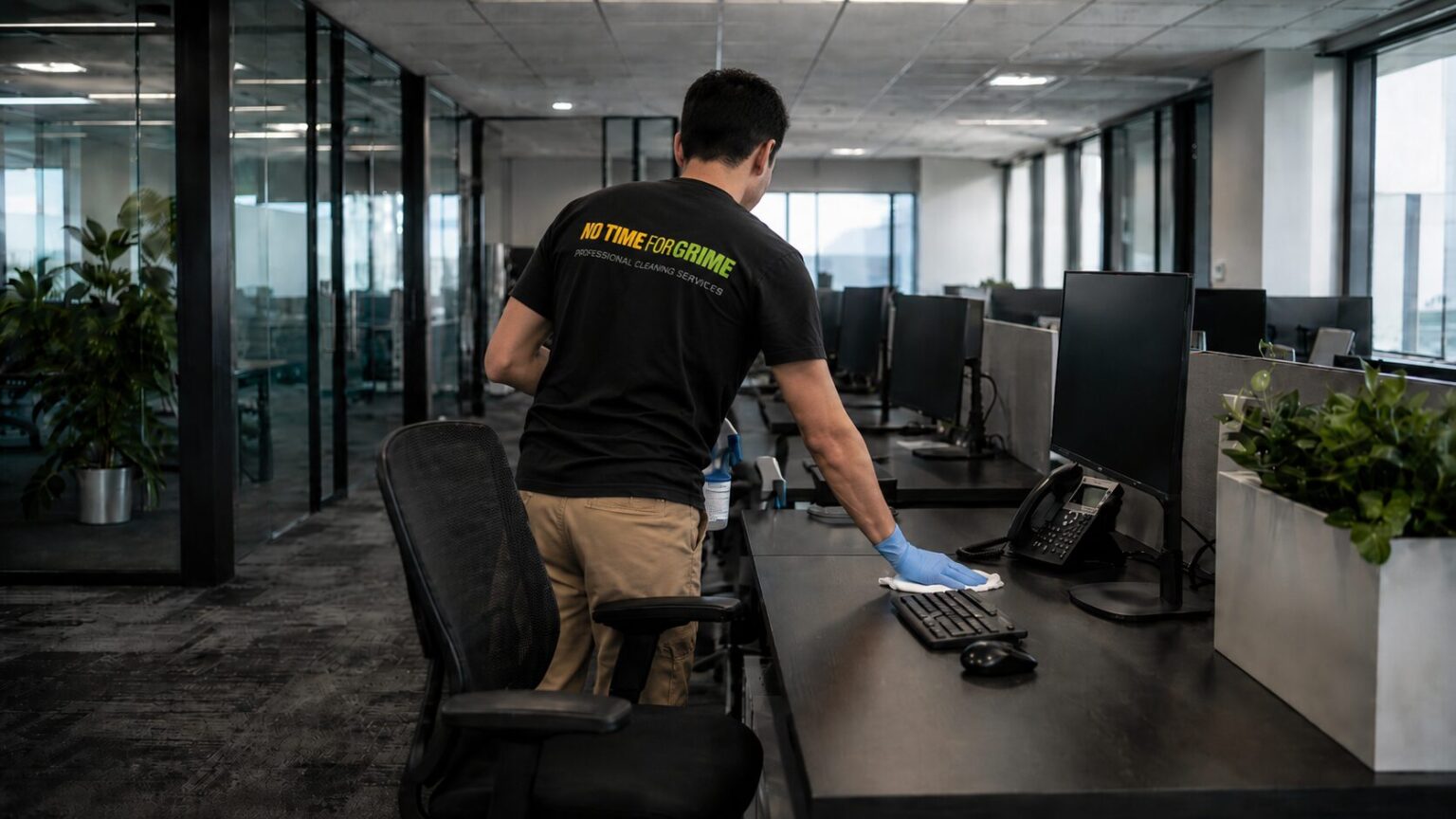
Workstations need more attention than most people think. Desks can look fine while keyboards, phones and chair arms carry the real grime.
The right workstation sanitising frequency depends on how the office is used:
- shared desks or hot desks should be reset after use
- personal desks should be wiped regularly, with a deeper clean weekly
- keyboards, mice and phones should be cleaned more often in busy periods
- meeting room remotes, tablets, and shared tech should be cleaned daily in high-use spaces
For screens and electronics, spray the cloth, not the device. Never soak ports, keyboards or buttons. Technology is brilliant, but it is not fond of being drowned.
NTFG’s guide on office hygiene tips to boost productivity has a good practical point on shared office technology and the “reset rule” for hot desking, which is a simple habit many offices can actually stick to.
4. Take Shared Kitchen Hygiene Seriously
The shared kitchen is usually where office standards either shine or fall apart.
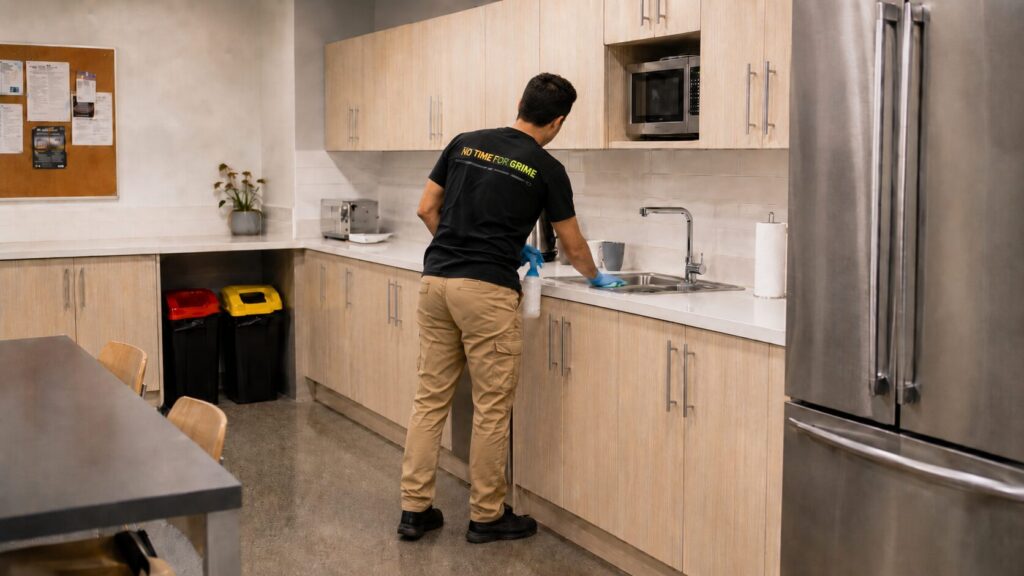
A proper kitchen deep clean should cover:
- fridge shelves, seals and handles
- microwave interior, buttons and door edges
- kettle, toaster and coffee machine areas
- sink, taps and splashback
- benches, cupboards and drawer handles
- bins, liners and the surrounding floor
- old food, expired milk and forgotten containers
Set a clear fridge clear-out day. If nobody owns the container, and it has started growing its own postcode, it is time to go.
5. Give Washrooms a Proper Routine
Washrooms need more than a wipe of the sink and a new toilet roll. They should be cleaned, sanitised, deodorised and restocked properly.
Pay attention to taps, flush buttons, door handles, cubicle locks, dispensers, mirrors, floors and bins. Supplies matter too. No soap or paper towels is not a small issue, it is the sort of thing staff notice immediately.
For offices that want washrooms handled properly as part of a wider hygiene plan, NTFG’s washroom services cover cleaning, restocking and ongoing maintenance for commercial restroom facilities.
6. Clean Floors Last
Floors should always come near the end. Vacuum under desks, around chair legs, along skirting boards and in corners. Mop hard floors with the correct product for the surface.
For carpets, look for flattened walkways, stains and musty smells. These are signs that regular vacuuming may not be enough.
Daily, Weekly and Periodic Office Cleaning Schedule
Not every task needs to be done every day. A sensible rhythm keeps things clean without turning the office into a cleaning boot camp.
Daily Cleaning Tasks
- Empty bins and replace liners
- Wipe kitchen benches and tables
- Clean washrooms
- Disinfect high-touch points
- Vacuum or sweep main walkways
- Spot clean spills and marks
Weekly Cleaning Tasks
- Clean keyboards, mice, phones and shared tech
- Wipe ledges, skirting boards and doorframes
- Clean inside microwaves
- Check fridge contents
- Mop hard floors thoroughly
- Dust shelves and storage areas
Monthly or Periodic Deep Cleaning Tasks
- Clean vents and grilles
- Detail glass, partitions and internal windows
- Move furniture and clean underneath
- Deep clean carpets or upholstery where needed
- Review washroom supplies and odour control
- Clean storage rooms and utility areas
After-Hours Office Cleaning: When It Makes Sense
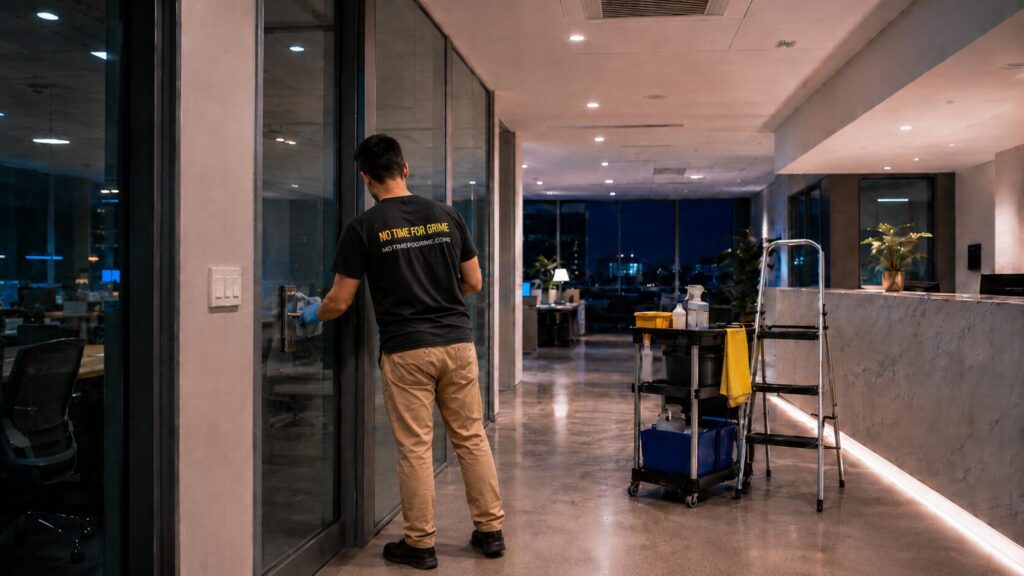
For many offices, after-hours office cleaning is the practical choice. Cleaners can work properly without staff stepping over vacuum cords, waiting for toilets to reopen or wondering why their chair has disappeared.
It works particularly well for:
- busy reception areas
- offices with regular client visits
- shared workspaces and hot-desking setups
- offices with kitchens and staff break areas
- workplaces needing carpet or floor drying time
- teams that cannot afford daytime disruption
NTFG’s commercial cleaning service notes that flexible scheduling, including after-hours and weekends, is available for businesses that need cleaning done with minimal disruption. That matters. A clean office should make work easier, not interrupt the whole day. Commercial cleaning Sydney
Air Quality and Cleaning Go Hand in Hand
Air quality and cleaning are closely connected. Dusty vents, dirty carpets, fabric chairs and poorly maintained corners can all make an office feel stale, even if the desks look neat.
SafeWork NSW says workplaces must be ventilated so work can be carried out without risk to health and safety. It explains that ventilation brings clean or fresh air into a space and removes stale or polluted air.
Cleaning will not replace proper ventilation, but it helps reduce dust and surface build-up. Together, regular cleaning and good airflow make a workplace feel fresher and more comfortable.
When to Bring in a Professional Office Cleaner
Some office cleaning can be handled internally. But once the space has high staff numbers, client traffic, shared kitchens, washrooms or hygiene risks, professional help starts making a lot more sense.
It is worth getting a cleaner involved when:
- staff are too busy to maintain cleaning standards
- bathrooms or kitchens need frequent attention
- hot desks or shared workstations are used
- first impressions matter for clients and visitors
- the office needs after-hours cleaning
- cleaning quality has become inconsistent
- carpets, floors or glass need periodic deep work
If you are comparing providers, NTFG’s guide on choosing the right commercial cleaning company is a useful next read because it helps you think through reliability, scope, standards and fit before signing up.
Final Thoughts
Deep cleaning an office is not about being fussy. It is about being consistent. The desks, kitchen, washrooms, floors, vents and shared touchpoints all play a part in how the workplace feels every day.
A clean office tells staff they matter. It tells visitors the business is organised. And it stops small jobs from turning into big, smelly, sticky ones later.
If your office is ready for a more reliable cleaning routine, have a look at NTFG’s office cleaning in Sydney and request a tailored quote. We will help keep the space clean, fresh and ready for business, without making a production out of it.