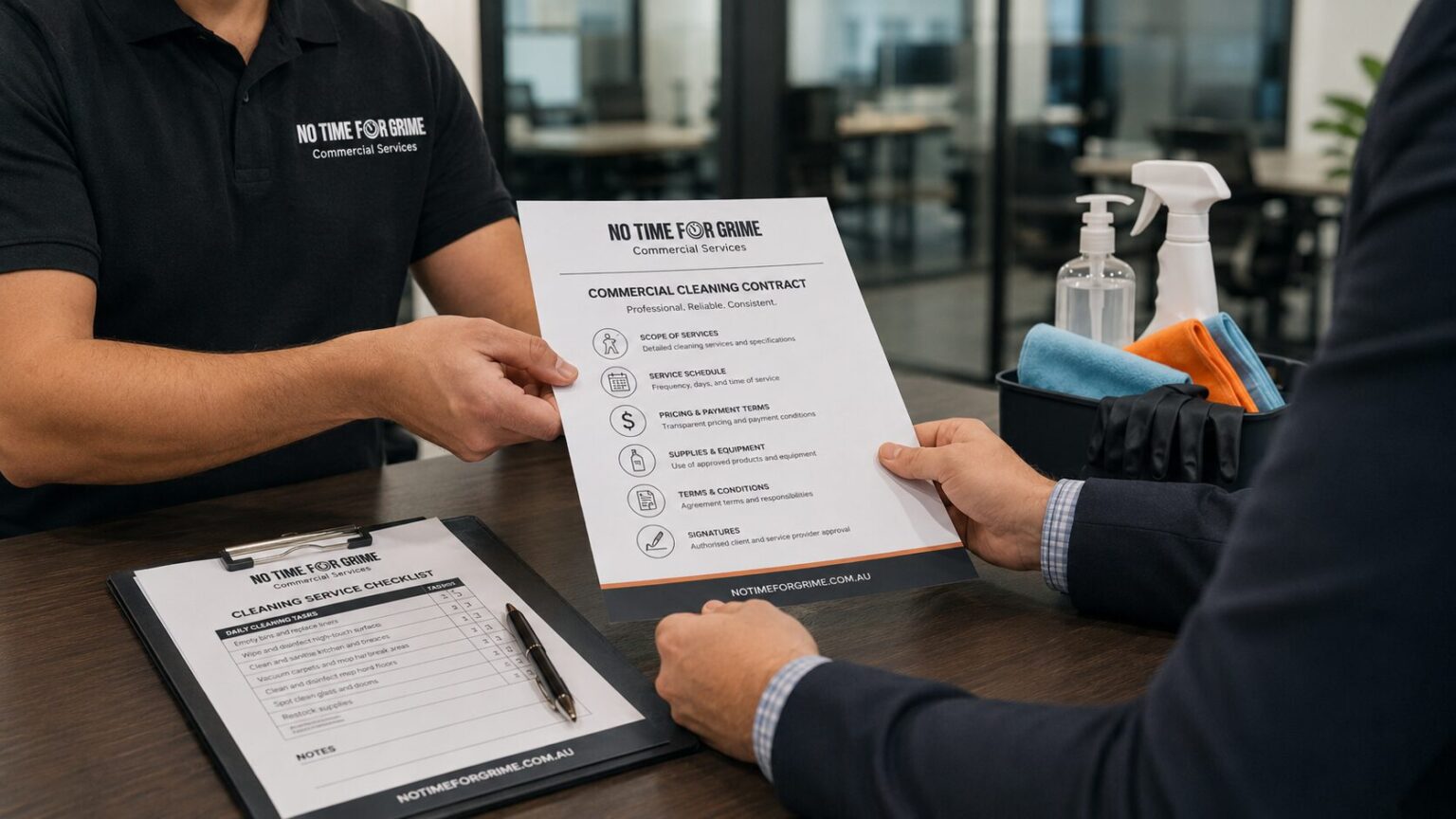
A cleaning contract should not just name a price. It should make the scope, standards, access, insurance and responsibilities crystal clear, so no one is left guessing when the bins are missed or the bathrooms stop feeling fresh.
Key Takeaways
- A good commercial cleaning contract should clearly list the scope, frequency, pricing, access details, safety requirements and quality standards.
- Office cleaning service specifications should be site-specific, not copied from a generic template.
- Cleaning SLA expectations help keep everyone accountable when tasks are missed or standards slip.
- Insurance, compliance checks and staff vetting for commercial cleaners are just as important as the cleaning itself.
A commercial cleaning contract is not the most exciting document you will ever read. No one is framing it and hanging it in the reception. But when the bins are missed, the bathrooms are half-done, or no one knows who is supposed to restock the hand soap, suddenly that quiet little contract becomes very important.
I’ve seen this happen plenty of times. A business signs up with a cleaner, everything starts well, and then the cracks appear. One person thought windows were included. Another assumed consumables were covered. The cleaner says deep cleaning costs extra. The office manager is left playing detective with a PDF attachment from six months ago.
That is why a commercial cleaning contract needs to do more than name a price. It should set out what is being cleaned, when it is being cleaned, who is responsible for what, and how standards will be checked over time.
This guide breaks down what a commercial cleaning contract should include, how to choose an office cleaning company with confidence, and what to watch for before you sign.
Why a Commercial Cleaning Contract Matters
A good contract protects both sides. For the client, it makes sure the workplace gets the service promised. For the cleaning company, it sets clear expectations so there is no guessing, no vague “can you just quickly do this?” requests, and no awkward arguments about what was included.
The problem with vague cleaning agreements is that they often sound fine at the start.
“General office cleaning twice a week.”
Looks harmless enough, right?
But what does “general” mean? Does it include kitchen appliances? Bathroom detail cleaning? Internal glass? High-touch surfaces? Carpet spot cleaning? Consumables? Bin liners? After-hours access? Quality audit visits?
If it is not written down, it can easily become a grey area. And grey areas are where standards go to have a little lie down.
What Does a Commercial Cleaning Contract Include?
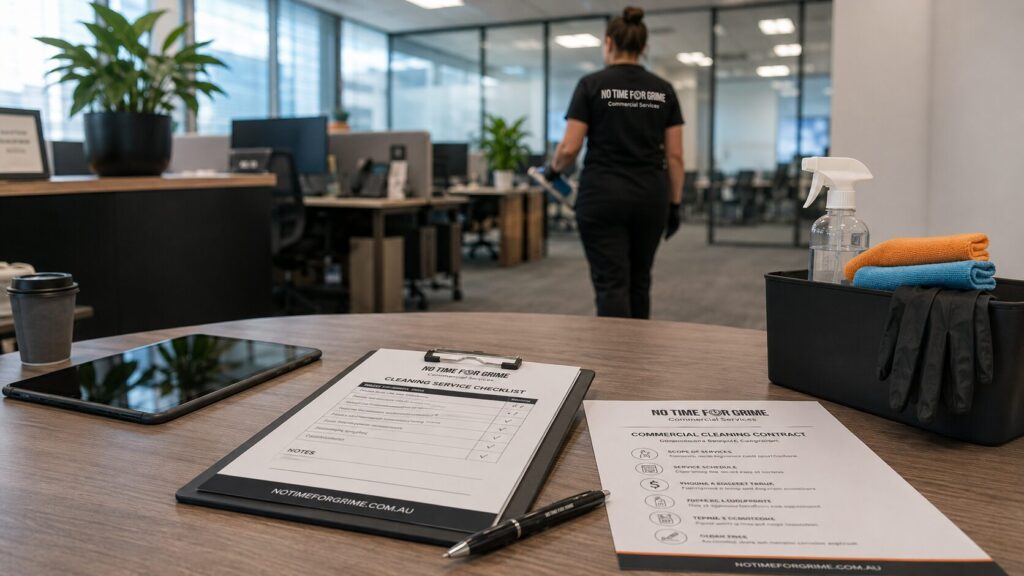
A solid commercial cleaning contract should cover the full working relationship, not just the price and start date. Here are the main sections worth checking.
1. Scope of Work
This is the heart of the contract. The scope of work should list the areas to be cleaned and the tasks required in each space.
For an office, that may include:
- reception areas
- workstations and desks
- meeting rooms
- kitchens and break rooms
- bathrooms
- hallways and entry points
- internal glass and partitions
- floors, carpets and hard surfaces
- bins and waste areas
- high-touch surfaces like switches, handles and lift buttons
The more specific the office cleaning service specifications are, the easier it is to check whether the job is being done properly.
A line like “clean kitchen” is too vague. A better version would include wiping benches, cleaning sinks and taps, emptying bins, mopping floors, wiping appliance handles, and restocking agreed consumables.
2. Cleaning Frequency
The contract should state how often each task is completed. Some tasks need daily attention, while others can be weekly, monthly or quarterly.
Here is a simple example:
| Cleaning Task | Typical Frequency | Why It Matters |
| Empty bins | Daily or per service | Stops odours and overflow |
| Wipe desks and touchpoints | Daily or per service | Helps maintain hygiene in shared spaces |
| Bathroom cleaning | Daily or per service | Keeps facilities fresh, stocked and usable |
| Kitchen cleaning | Daily or per service | Prevents food residue, smells and pest issues |
| Internal glass | Weekly or fortnightly | Keeps reception and meeting areas sharp |
| Carpet deep cleaning | Periodic | Helps manage wear, stains and odours |
Frequency should match the site. A quiet office with ten staff will not need the same cleaning rhythm as a busy gym, childcare centre or medical-style workspace.
For a practical routine, NTFG’s guide to an office cleaning checklist for Australian workplaces is a helpful companion piece.
3. Pricing and What Is Included
Pricing should be clear, boring and completely free of surprises. Boring is beautiful when invoices are involved.
Your contract should explain:
- the regular service fee
- payment terms
- GST treatment
- whether products and equipment are included
- whether consumables are included
- what counts as an additional service
- how price changes are handled
- what happens if the cleaning schedule changes
This is where many businesses get caught. A quote might look cheaper, but only because key items are excluded. For example, consumables, carpet cleaning, window cleaning, emergency cleans, public holiday work or extra site visits may all sit outside the standard fee.
Cheaper is not always cheaper if every second request becomes an add-on.
4. Supplies, Equipment and Consumables
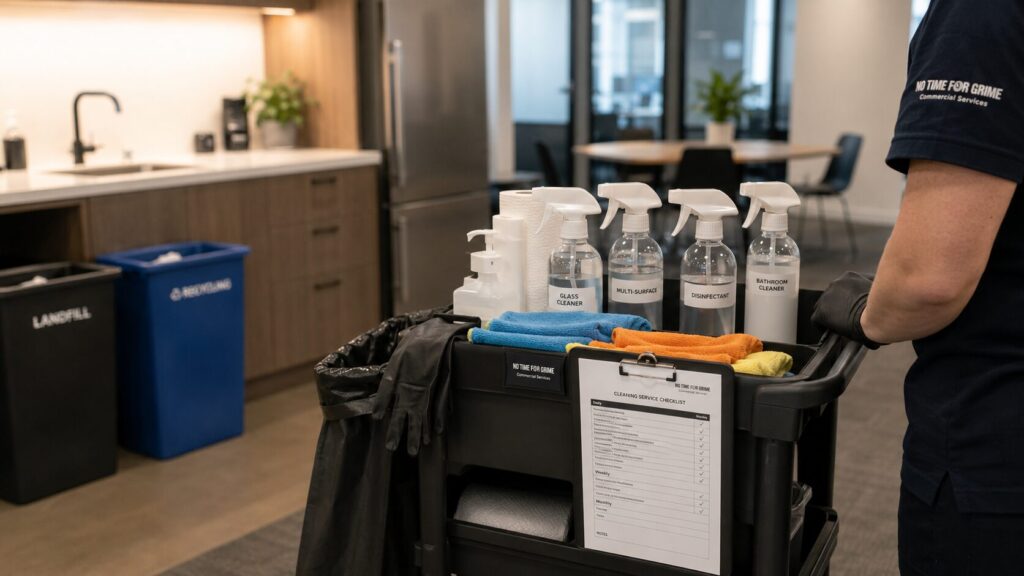
A proper contract should say who supplies the cleaning products, chemicals, tools and consumables.
This may include:
- toilet paper
- paper towels
- hand soap
- bin liners
- sanitiser
- cleaning chemicals
- vacuum cleaners, mops and cloths
- specialist floor or carpet equipment
This matters because it affects both cost and consistency. If your cleaner supplies everything, that should be built into the agreement. If your business supplies consumables, someone needs to monitor stock levels so the cleaner is not blamed when the soap runs out.
It is also worth checking that products are appropriate for your surfaces and workplace needs. Safe Work Australia provides guidance on manufactured chemicals and related workplace safety considerations, including safety data sheets and chemical storage, which is useful when reviewing cleaning product responsibilities.
5. Access, Security and Site Instructions
Cleaners often work after hours, early mornings or weekends. That means the contract should be clear about access.
Include details such as:
- keys, swipe cards or alarm codes
- sign-in requirements
- restricted areas
- parking or loading access
- security procedures
- who to contact if access fails
- lock-up responsibilities
- what happens during public holidays or site closures
This is also where staff vetting for commercial cleaners becomes important. If people are entering your workplace outside normal hours, you want to know they are trained, trusted and properly checked.
At No Time For Grime, our commercial cleaning service includes trained, insured and police-checked cleaners, along with flexible after-hours and weekend options where required. That is the kind of detail worth confirming before a contract starts, not after something goes sideways.
Insurance and Compliance Checks
Insurance and compliance checks are not just admin. They are basic risk management.
Your contract should confirm that the cleaning provider has appropriate insurance and that their team follows relevant workplace health and safety procedures. Depending on the site, this may include safe chemical handling, equipment training, incident reporting and site-specific induction requirements.
You should also be aware that Australia’s contract cleaning industry has workplace obligations around employees, contractors and entitlements. The Fair Work Ombudsman explains that contract cleaning workers may be employees, independent contractors, subcontractors or labour hire workers, and different rights and obligations may apply depending on the arrangement.
You do not need to become a workplace law expert to hire a cleaner. Thank goodness. But you should choose a company that takes compliance seriously and is willing to be transparent about how it operates.
Cleaning SLA Expectations and Quality Standards
A service level agreement, or SLA, sets the standard for performance. In plain English, it answers this question:
“What happens if the cleaning is not good enough?”
Cleaning SLA expectations may include:
- How often are quality checks completed.
- How issues should be reported.
- How quickly the cleaning company responds.
- What happens when a task is missed.
- How recurring problems are fixed.
- Who manages communication on both sides.
Quality audit visits are especially useful because they stop standards from sliding quietly in the background. Anyone can clean well for the first two weeks. The real test is whether standards still hold up three months later.
For more on keeping hygiene standards consistent, this guide on office hygiene practices for productivity and staff wellbeing gives a good overview of why regular habits matter.
Red Flags Before You Sign
Not every contract is a good one. Some are vague. Some are too rigid. Some look harmless until you realise leaving is harder than cancelling a gym membership from 2009.
Watch out for:
- unclear task lists
- no mention of insurance
- no staff vetting or training details
- vague pricing or too many unknown extras
- no issue-resolution process
- no review period
- long lock-in terms without performance protections
- automatic renewals that are easy to miss
- no clear exit clause
- no mention of products, equipment or consumables
A good cleaning company should be comfortable explaining the agreement. If they rush you, dodge questions or hide behind jargon, that is usually a sign to slow down.
How to Choose an Office Cleaning Company
When comparing providers, do not just ask, “How much?”
Ask better questions:
- What is included in the regular service?
- What is excluded?
- Who supplies products and consumables?
- Are your cleaners police-checked and trained?
- Are you insured?
- Can you clean after hours?
- How do you handle missed tasks or complaints?
- Do you complete quality audit visits?
- Can the scope change if our workplace changes?
- Who will be my main contact?
The best office cleaning company is not always the cheapest. It is the one that gives you confidence that the work will be done properly, consistently and without you needing to chase every little thing.
For seasonal resets or heavier workplace cleans, NTFG’s post-holiday commercial cleaning guide is also useful when thinking about periodic cleaning needs beyond the regular contract.
What to Review Before Renewing a Contract
A cleaning contract should not sit untouched forever. Workplaces change. Teams grow. Hybrid schedules shift. Kitchens get busier. Bathrooms need more attention. New flooring gets installed. Suddenly, the old cleaning plan does not quite fit.
Before renewing, review:
- whether the current scope still matches the site
- common complaints or missed tasks
- areas that need more frequent cleaning
- services that are no longer needed
- pricing changes
- communication quality
- audit results
- staff feedback
A yearly review is a sensible rhythm for most workplaces. It keeps the agreement fresh and stops small frustrations from becoming “we need a new cleaner” problems.
A Cleaner Contract Means a Cleaner Workplace
A commercial cleaning contract should make life easier. It should remove guesswork, protect standards and give your team confidence that the workplace will be clean, hygienic and ready for the day.
The best agreements are clear without being complicated. They spell out the scope, frequency, pricing, access, compliance, staff vetting, cleaning SLA expectations and quality checks. They also leave room to adjust when the workplace changes, because real businesses are not frozen in time.
At NTFG, we build cleaning plans around real sites, real routines and real standards. No vague promises. No “she’ll be right” cleaning. Just clear agreements, reliable service and a team that actually shows up.
If your current cleaning contract feels vague, messy or harder to understand than it should be, visit our commercial cleaning service page and request a tailored quote. We’ll help you work out what your site actually needs, then put it into a plan that makes sense.
This article is for general informational purposes only and should not be taken as legal advice. For contract, employment or compliance concerns, seek advice from the appropriate professional or government body.