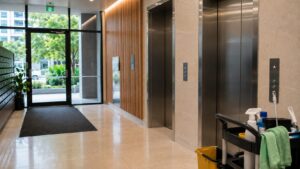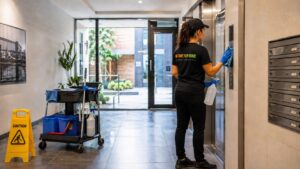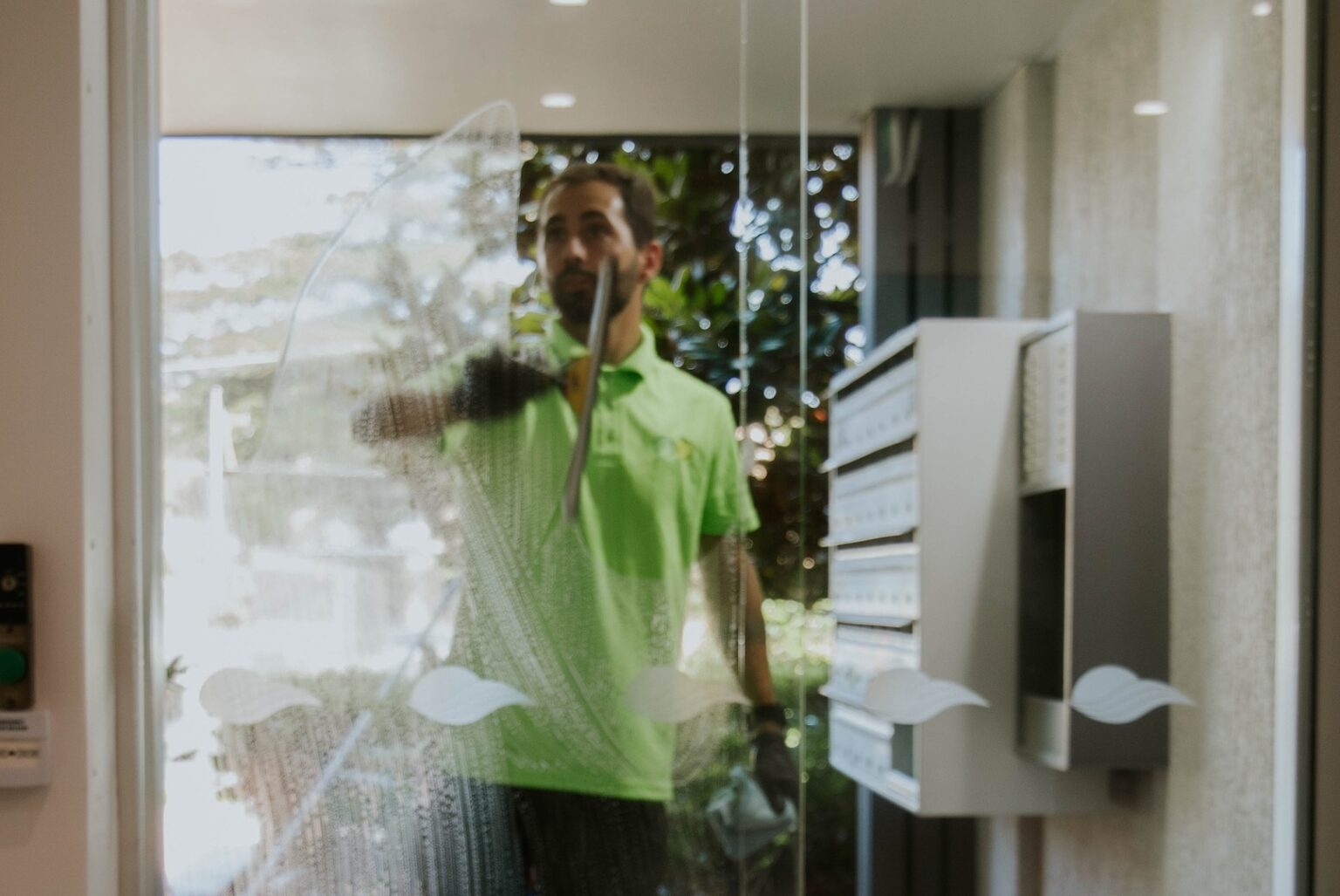
Many strata managers inherit a strata cleaning problem. The contract is vague, the scope is thin, and the complaints from residents have been building for months. The cleaner shows up, does something, and leaves. Nobody really knows what was agreed, and the pattern repeats because the agreement was never built to hold anyone accountable.
Strata cleaning is far more likely to succeed when the scope is specific, the contractor is compliant, and the agreement sets measurable expectations. Get those right and resident complaints drop, costs become predictable, and the common areas actually stay clean. Get them wrong and you’re managing complaints instead of managing a building.
This guide gives building managers and body corporate members a practical framework to define what they need, estimate realistic costs, verify contractor credentials, and write a contract that holds. Sydney-based providers like No Time For Grime illustrate what a properly scoped strata cleaning service looks like, and that benchmark is a useful reference throughout.
What a proper strata cleaning scope actually covers
What’s in scope and what isn’t
Strata cleaning covers common property only. That means lobbies, lifts, corridors, stairwells, bin rooms, car parks, mailbox areas, shared amenities, and external paths. Private lots, apartment interiors, pest control, and gardening are excluded. The boundary matters because vague scopes lead to disputes: when a cleaner is told to “clean the lobby,” nobody agrees on what that means until something is missed.
The areas that generate the most resident complaints
Bin rooms, lifts, and car parks are consistently identified as the main sources of resident dissatisfaction in strata buildings. These aren’t areas where a quick vacuum suffices. Bin rooms need an explicit washdown procedure, not a line that says “clean bins,” and lifts need scheduled disinfection of buttons, rails, and door tracks at a set frequency. When the scope is specific about these areas, the cleaner knows what’s expected and the manager knows exactly what to inspect.
Periodic tasks that fall through the cracks
Carpet extraction, pressure washing, high-level dusting, and external window cleaning are almost always missing from base contracts. They show up later as unexpected extras on invoices, or they simply never happen. The fix is straightforward: name every periodic task in the contract, assign a clear schedule such as quarterly or biannual, and treat them as obligations rather than optional add-ons.
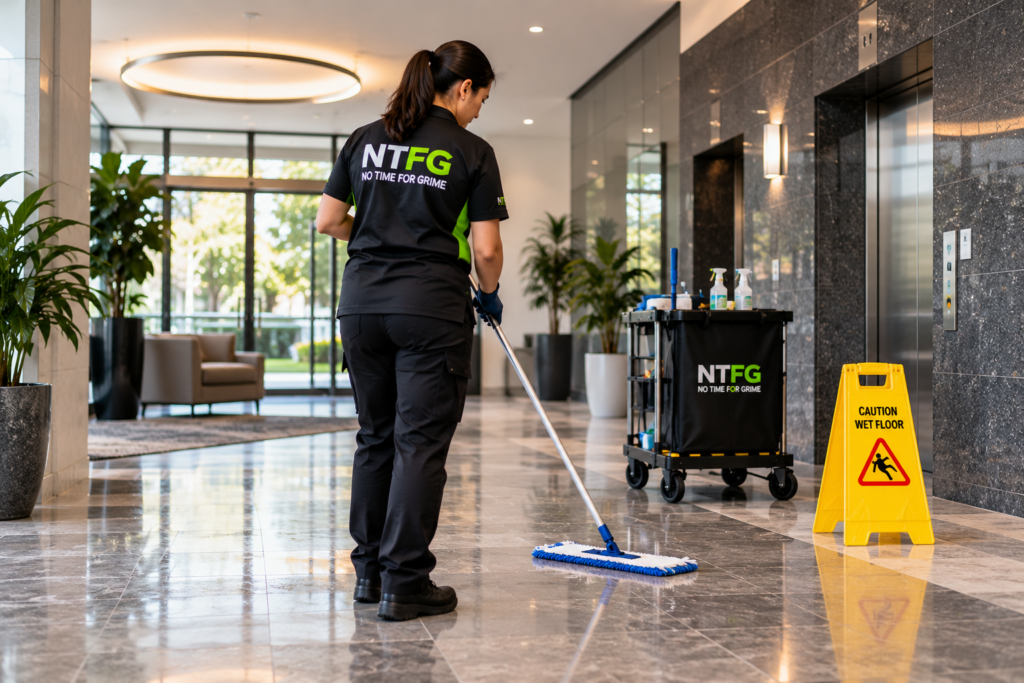
How often each area of the building should be serviced
Daily and weekly non-negotiables
Foyers, lifts, and high-touch points should be cleaned at every service visit without exception. Corridors, stairwells, external paths, and mail areas need weekly attention at minimum for most buildings. Bin rooms require at least a weekly washdown, with higher frequency during summer or in high-density buildings where waste volumes are significant and odour becomes a persistent complaint.
Monthly and quarterly tasks
Car park sweeping, wall and skirting cleans, and detailed stair cleans fall into the fortnightly to monthly category. Pressure washing, carpet extraction, floor polishing, and high-access dusting belong in the quarterly schedule. These tasks should be listed in the contract with specific dates or trigger conditions, not left to the cleaner’s discretion, because discretion is where periodic work goes to die.
Adjusting for your building’s profile
A 12-unit walk-up needs a different programme than a 100-unit high-rise with a gym and pool. Occupancy level, number of lifts, waste volume, and shared amenities all affect the right schedule. The cleaning plan should be written for the specific building, not adapted from a generic template designed for a completely different site.
What strata common area cleaning costs in Sydney in 2026
Pricing models used by strata cleaning contractors
Most strata cleaning contractors use per-visit or monthly contract pricing. Hourly rates apply mainly to small or irregular jobs, running roughly $30 to $100 per hour depending on complexity and access. Per-visit pricing typically ranges from $350 to $1,100 or more depending on building size and scope, while monthly contracts for Sydney strata buildings commonly fall between $800 and $4,000 or more, with the range reflecting everything from a small walk-up to a large high-rise with multiple amenities.
What affects your quote
Sydney sits at the higher end of the national range, with a rough average of around $600 per visit across strata buildings in 2026, though the actual figure for any given building will vary based on scope and frequency. Building size, visit frequency, lifts, basement car parks, bin rooms, and shared amenities all push the price up. Consumables, bin-liner supply, and periodic tasks are often quoted separately, so the headline figure in a proposal rarely tells the full story of what you’ll actually pay.
How to compare quotes fairly
A quote should itemise labour hours, visit frequency, areas covered, consumables, periodic work, GST, and call-out charges. A cheap quote that excludes bin-room washdowns or carpet cleaning isn’t a cheap quote. For a mid-sized Sydney complex of 20 to 50 units, budget $1,000 to $1,500 per month excluding GST as a realistic baseline for a properly scoped strata cleaning service. Anything below that should prompt a detailed line-by-line review of what’s been excluded.
Compliance and insurance: what to verify before you sign
Insurance minimums and how to verify them
Public liability insurance should be a minimum of $10 million, and $20 million for large or high-risk buildings. Workers compensation is a separate certificate of currency, required for every employer whose staff attend the site. Request these certificates directly: don’t accept a contractor’s written assurance that coverage exists. Consider requiring the owners corporation to be noted as an interested party on the public liability policy where the insurer permits it.
WHS documentation and staff checks
Every cleaning contractor operating in NSW is a PCBU under the Work Health and Safety Act 2011 and carries legal obligations under SafeWork NSW. Request a WHS policy, site risk assessment, safe work procedures, and a chemical register with Safety Data Sheets before engagement. For high-risk tasks such as pressure washing or elevated access work, require a Safe Work Method Statement separately, it gives both parties clarity on the specific risks involved. Police-checked and identity-verified staff are worth specifying in the contract, particularly for buildings with restricted access and security-sensitive areas, provided any checks are handled in accordance with applicable privacy requirements.
What ISO 9001 certification signals
ISO 9001 certification means the contractor operates a documented quality management system, not just a claim of good service. Processes, inspections, and corrective actions are systematically managed, which reduces inconsistency across staff changes and service visits. When evaluating strata cleaners, verify the certificate is current and issued by an accredited body, and ask to see inspection records and corrective-action logs as evidence that the system is genuinely in use rather than sitting in a folder somewhere.
How to identify a strata cleaning contractor worth trusting
The real cause of most strata cleaning problems
Inconsistency in communal area cleaning rarely comes from a lack of skill. It comes from a weak scope, no inspection process, and high staff turnover. A contractor who provides a site-specific cleaning plan before signing is worth more than one who promises “exceptional service” without documentation to back it up. What a contractor is willing to put in writing before you sign tells you a great deal about what you’ll actually get once work begins.
What a reliable service looks like in practice
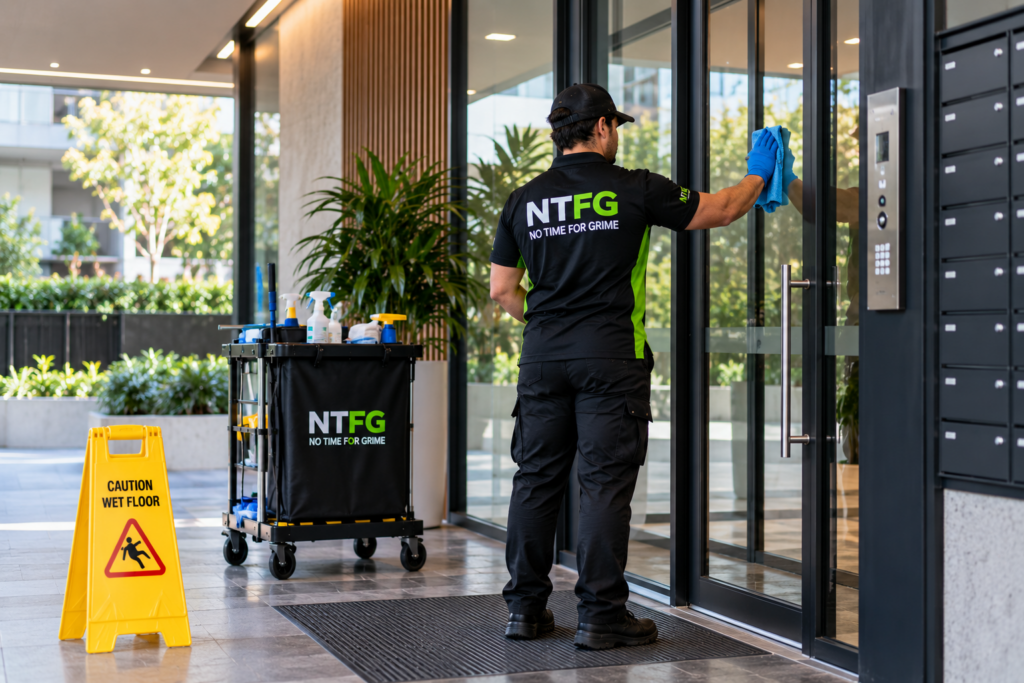
Look for a dedicated site supervisor or named building contact, digital checklists and photographic reporting after each visit, and a stable team allocated to the building rather than rotating casuals who’ve never seen the site before. No Time For Grime is a Sydney-based strata cleaning provider that demonstrates what this looks like in practice: ISO-certified quality management, police-checked staff, transparent pricing, and a tailored cleaning plan prepared for each site before work begins. They service strata buildings across Sydney and conduct a free site inspection before quoting, a straightforward indicator of how a serious contractor should operate.
KPIs to include in your service agreement
Write measurable performance expectations into the contract from the start. A sensible framework for body corporate cleaning includes an inspection pass rate of 90% or higher, service compliance (tasks completed on schedule) of 95% or higher, complaint acknowledgement within two to four business hours of receipt, and periodic tasks tracked separately from routine visit records. These aren’t aspirational targets; they’re the minimum standard any professional strata janitorial service should be held to, and a good contractor won’t resist them.
Contract checklist: what to lock in before work starts
Scope and frequency items every agreement needs
Every body corporate cleaning agreement needs a room-by-room task list covering lobbies, lifts, corridors, stairwells, bin rooms, car parks, mailbox areas, and shared amenities. Each task should have an explicit frequency assigned: daily, weekly, fortnightly, monthly, or quarterly. Name every periodic task with scheduled dates or trigger conditions, and document clear exclusions, private lots, hazardous waste, pest control, and gardening, so there’s no room for ambiguity later.
Operational and compliance protections
The contract should specify minimum insurance requirements, with current certificates provided before work starts rather than after. Add a key and access-card register with lost-key reporting obligations, approved cleaning windows to minimise resident disruption, and a clear incident reporting and defect escalation procedure. Include the right to audit, inspect, and request corrective actions with a defined closure timeframe. Prohibit undisclosed subcontracting, or require written approval. Include a termination clause triggered by lapsed insurance or repeated non-compliance, so you’re not stuck in a contract with a contractor who’s stopped meeting their obligations.
A strata cleaning problem is almost always a contract problem
Most strata cleaning failures trace back to the same root cause: the agreement wasn’t precise enough to hold anyone accountable. When the scope is detailed, the contractor is compliant, and the agreement includes measurable KPIs, resident complaints drop and costs become predictable. Buildings that run cleanly aren’t lucky; they have a contract that was built properly from the start.
The time you invest upfront defining exactly what you need is time you won’t spend managing complaints, chasing missed tasks, or renegotiating scope with a contractor who claims the bin room was never included. Get the brief right and verify the credentials, then lock in a contract that protects the building for the long term.
For Sydney strata buildings, No Time For Grime offers a free site inspection and a tailored strata maintenance plan before you commit to anything. Get in touch with the team for a no-obligation quote and see what a properly scoped strata cleaning service should look like.
Book a free site inspection and get a tailored strata cleaning quote.