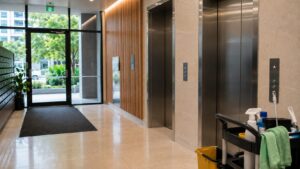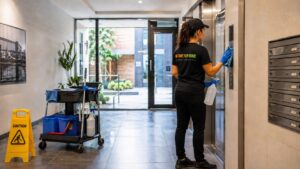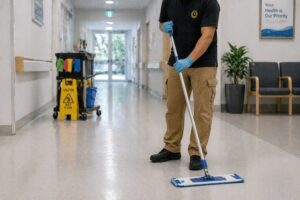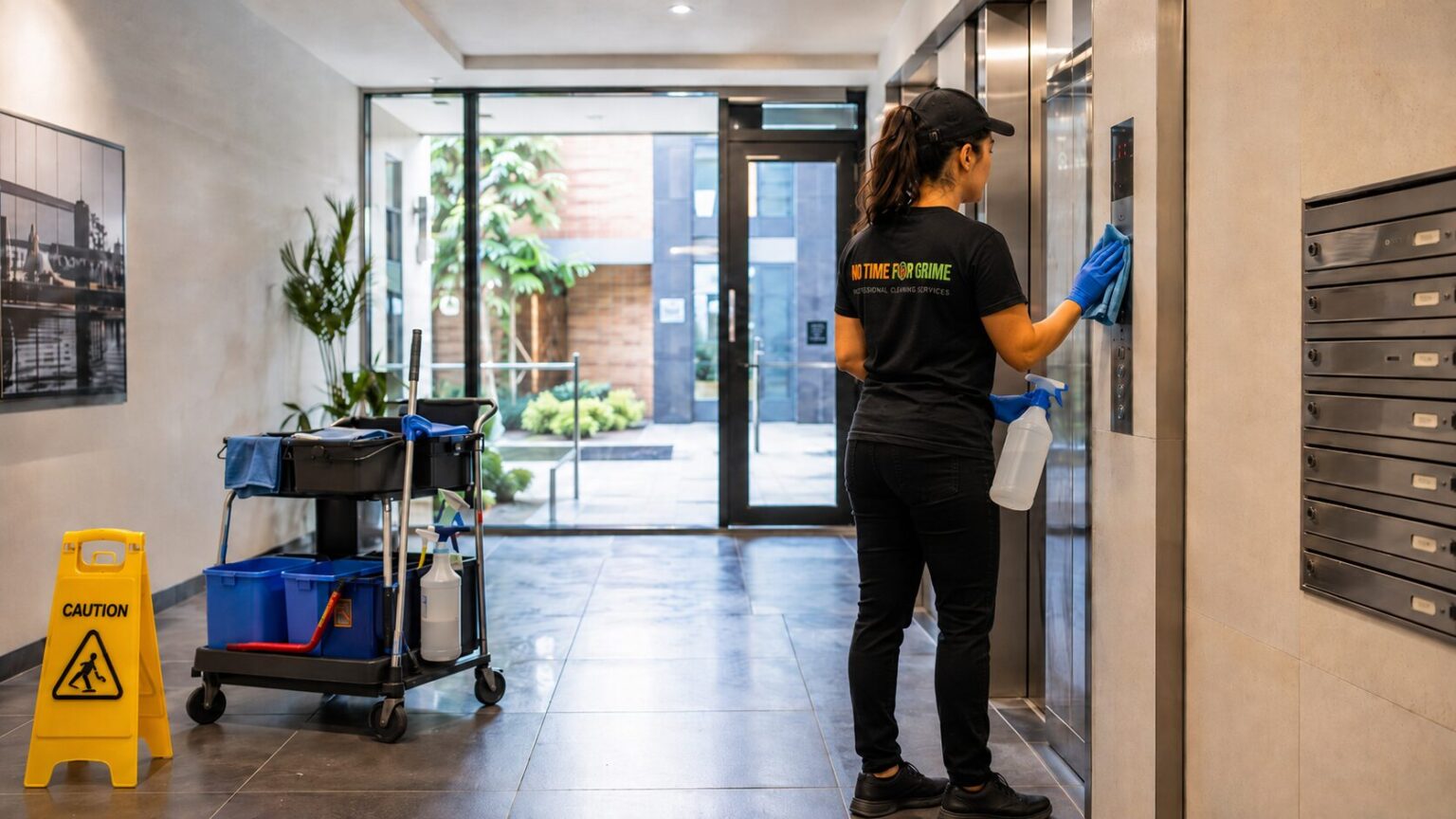
Strata cleaning obligations are easier to manage when the scope, schedule and responsibilities are clear from the start. That way, lobbies, lifts, bin rooms and shared areas are not left to guesswork.
Key Takeaways
- Strata cleaning obligations usually centre on keeping common areas clean, safe and usable for residents, visitors and contractors.
- The owners corporation is generally responsible for common property, while individual owners and residents look after their own lots.
- A clear cleaning scope helps strata managers, committees and cleaners avoid missed tasks, vague expectations and recurring complaints.
- Lobbies, lifts, stairwells, bin rooms, car parks and outdoor areas all need different cleaning schedules based on use, risk and traffic.
A clean strata building does not happen by accident. It happens because someone has worked out what needs to be cleaned, how often it needs doing, who is responsible, and what standard everyone is working towards.
I have seen the difference this makes. In one building, the lobby smells fresh, the lift buttons are clean, the bins are under control, and residents barely think about the cleaner because everything just works. In another, the bin room smells like a seafood truck in January, the stairwell has not seen a mop in weeks, and the strata manager is getting emails before breakfast. Not the dream.
Strata cleaning obligations can feel a bit grey at first, especially when common property, residents, committees and contractors all overlap. The good news is that most issues become easier to manage when the cleaning scope is clear and the schedule matches the building.
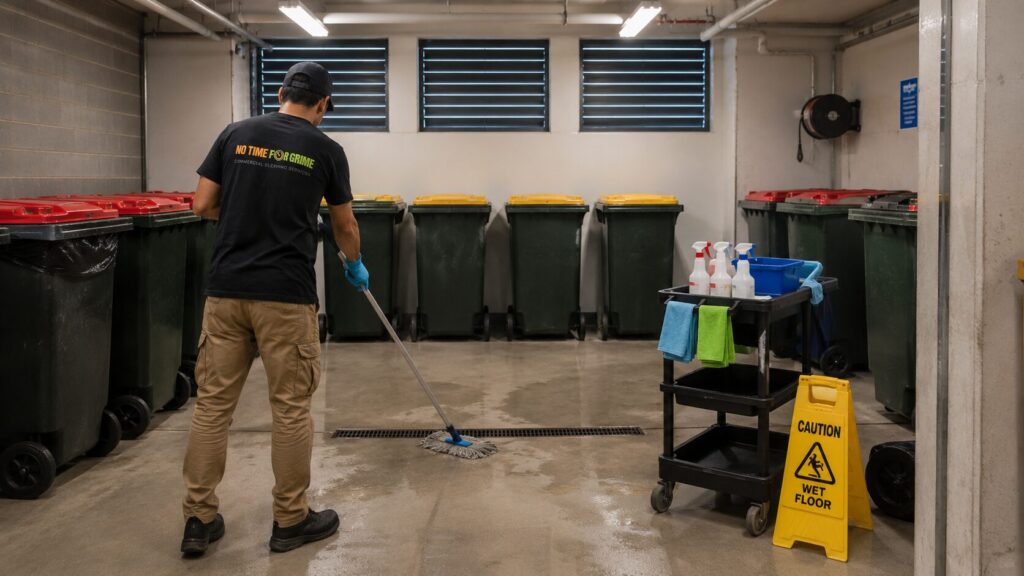
What Does Strata Cleaning Include?
Strata cleaning covers the shared spaces of a residential or mixed-use building. These are the areas that residents, visitors, contractors and sometimes the public move through every day.
In plain English, strata cleaning is not just “a quick vacuum and a bin run”. A proper service usually covers the areas that shape first impressions, safety and hygiene across the property.
Common inclusions may include:
- Entry foyers and lobbies
- Corridors and internal walkways
- Stairwells and handrails
- Lifts, lift doors and control panels
- Mailrooms and intercom areas
- Bin rooms and waste areas
- Shared bathrooms or amenities
- Car parks and basement areas
- Outdoor paths and common courtyards
- Glass doors and entry touchpoints
- Pressure washing or periodic hard-surface cleaning
- Garden maintenance add-ons where required
At No Time For Grime, our strata cleaning service in Sydney is built around clear scopes, scheduled visits and practical reporting, so committees and strata managers are not left guessing what has been done.
Who Is Responsible For Strata Cleaning?
IThe owners corporation is generally responsible for common property, while owners are responsible for areas within their own lot. The NSW Government strata repairs and maintenance guidance explains that common property maintenance and repair sits with the owners corporation, which is an important starting point when working out body corporate cleaning responsibilities.
That does not mean the committee has to personally mop the foyer. Thankfully. But it does mean there needs to be an agreed system for keeping common areas clean and maintained.
Owners Corporation
The owners corporation is generally responsible for common property. This often includes approving budgets, engaging contractors and making sure shared areas are properly looked after.
Strata Committee
The committee may help review quotes, approve scopes, raise issues and make decisions about service frequency. In smaller buildings, committee members often notice problems first because they live with them daily.
Strata Manager
The strata manager usually helps coordinate contractors, manage communication, handle invoices, keep records and report issues back to the committee or owners corporation.
Cleaning Contractor
The cleaning contractor should follow the agreed scope, complete scheduled tasks, report hazards or damage, and communicate clearly if something falls outside the normal service.
Residents And Owners
Residents and owners should use shared areas respectfully. Cleaners can maintain bin rooms, but they cannot perform miracles if rubbish is dumped beside the bins every second night. Even the best mop has limits.
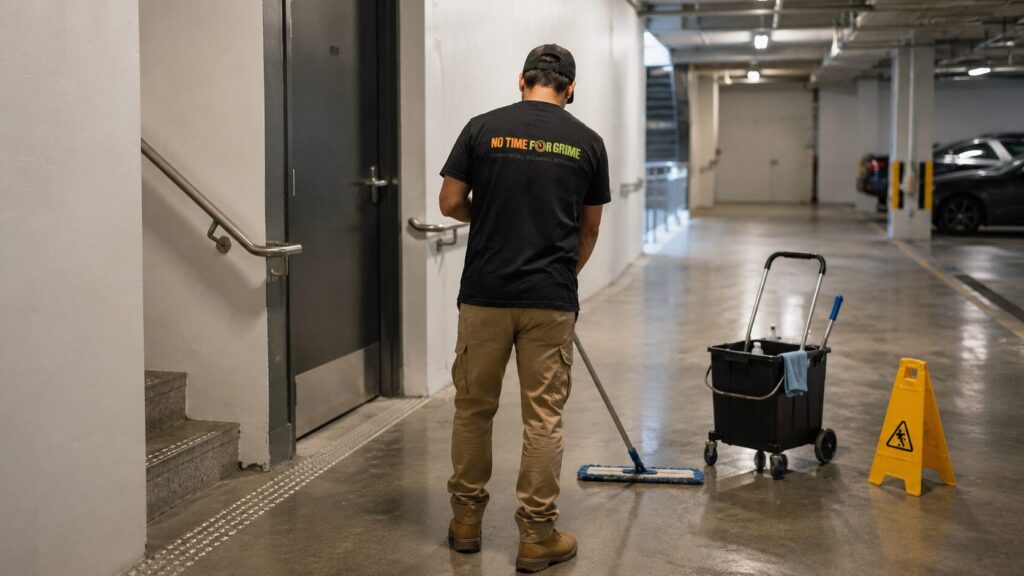
Strata Cleaning Checklist By Area
A useful strata cleaning checklist should be specific enough to check, but flexible enough to suit the building. A three-storey walk-up does not need the same schedule as a high-rise with lifts, a gym, basement parking and a busy bin room.
| Area | Typical Cleaning Tasks | Why It Matters |
|---|---|---|
| Lobby and foyer | Sweep, mop, vacuum, wipe entry glass, clean touchpoints | First impressions, resident pride and visitor experience |
| Lifts | Wipe buttons, clean doors, spot clean walls, mop floors | Hygiene, odour control and high-touch surface care |
| Corridors | Vacuum or mop floors, remove marks, dust ledges | Keeps shared access areas presentable |
| Stairwells | Sweep, mop, clean handrails, remove cobwebs | Helps reduce slip risks and keeps emergency paths tidy |
| Bin rooms | Sweep, wash floors, disinfect surfaces, manage spills | Odour, pests and resident complaints |
| Car parks | Sweep, remove debris, spot clean stains, clear cobwebs | Safety, appearance and long-term surface care |
| Outdoor areas | Sweep paths, remove leaf litter, clean shared seating | Usability, drainage and presentation |
The exact checklist should be confirmed during a site walk-through. That is where you spot the little things that matter, like the basement corner that collects leaves, the lift mirror everyone touches, or the bin room drain that blocks whenever residents overfill bags.
How Often Should Common Areas Be Cleaned?
There is no single answer. Cleaning frequency depends on the size of the building, the number of residents, visitor traffic, pets, bins, weather exposure and the standard the committee wants to maintain.
Here is a practical starting point.
| Frequency | Suitable Tasks |
| Daily or several times weekly | High-use lobbies, lifts, bin rooms, touchpoints and shared amenities |
| Weekly | Corridors, stairwells, entry doors, mail areas and general floor care |
| Fortnightly | Lower-traffic buildings, external sweep downs and light-detail tasks |
| Monthly | Internal glass, cobweb removal, basement detail cleaning and minor pressure washing |
| Quarterly or seasonal | Carpet cleaning, hard floor scrubbing, high-pressure cleaning and larger deep cleans |
A smaller block may be fine with weekly or fortnightly cleaning. A busy apartment building with lifts, pets, deliveries and a heavy bin area may need several visits a week. The trick is not to copy another building’s schedule. Match the clean to the real use of the site.
High-Touch And High-Risk Areas Need Extra Attention
Some areas create more complaints and more risk than others. If the lobby is a bit dusty, people notice. If the bin room smells, people complain. If the stairwell is slippery, it becomes a safety concern.
High-touch and high-risk areas often include:
- Lift buttons
- Door handles
- Intercoms
- Handrails
- Light switches
- Bin lids and bin room doors
- Shared bathroom surfaces
- Mailbox areas
- Gym or shared amenity equipment
- Car park pedestrian paths
Cleaning products also need to be handled properly. Safe Work Australia’s safety data sheets guidance explains that SDS provide important safety information about hazardous chemicals, which is why cleaning products should be handled by trained staff who understand the surfaces, risks and instructions involved.
How To Build A Clear Strata Cleaning Scope Of Works
A vague scope is where standards go to hide. If the agreement simply says “clean common areas”, everyone will eventually have a different idea of what that means.
A better strata cleaning scope should include:
- Areas included
List every shared area to be cleaned, including lobbies, lifts, stairs, car parks, bin rooms and outdoor zones. - Tasks by area
Break down what happens in each space. For example, “lift cleaning” might include wiping buttons, cleaning doors, spot cleaning walls and mopping floors. - Frequency
State whether tasks are daily, weekly, fortnightly, monthly or periodic. - Products and equipment
Confirm who supplies chemicals, cloths, vacuums, mops, bin liners or specialist equipment. - Access details
Include keys, swipe cards, alarms, parking, service entries and after-hours requirements. - Reporting expectations
Confirm whether the cleaner provides checklists, photos, notes or issue reports. - Exclusions and add-ons
Be clear about specialist cleaning, emergency callouts, windows, pressure washing, carpets and gardening.
For a deeper look at contract structure, NTFG’s guide on what a commercial cleaning contract should include is useful because the same principles apply to strata sites: clear scope, clear standards and no sneaky grey areas.
What Should Strata Managers Expect From Cleaning Reports?
Good reporting does not need to be fancy. It just needs to be useful.
For strata managers, a simple cleaning report can help answer three questions:
- Was the scheduled clean completed?
- Were any issues found?
- Does anything need committee approval or follow-up?
A practical report may include the date, cleaner name, completed tasks, skipped areas and reason, photos where needed, damage noticed, access issues, bin room problems or recommendations for periodic cleaning.
This matters because strata managers are often managing multiple buildings. They cannot be everywhere at once, much as some residents seem to expect it. Clear reporting gives everyone a record instead of relying on memory, assumptions or one very passionate email thread.
How To Compare Strata Cleaning Quotes
A cheap strata cleaning quote can look good until you realise half the work is missing. When comparing providers, do not just ask for a price. Ask what the price includes.
Check for:
- Public liability insurance
- Trained and uniformed cleaners
- Clear scope of works
- Building-specific schedule
- Products and equipment included
- After-hours or low-disruption options
- Issue reporting and response times
- Supervision or quality checks
- Specialist services available if needed
- Clear pricing for add-ons
It also helps to ask how the company handles missed tasks, complaints and scope changes. Buildings change over time. New residents move in, bins increase, gardens grow, carpets wear, and suddenly the old schedule does not quite cut it anymore.
If your committee is still weighing up providers, this guide to choosing the right commercial cleaning company can help shape better questions before you sign.
When Routine Strata Cleaning Needs Specialist Support
Routine cleaning keeps the property ticking over. Specialist cleaning handles the jobs that need different equipment, timing or expertise.
That may include:
- High-pressure cleaning
- Carpet cleaning
- Hard floor machine scrubbing
- Window cleaning
- Car park cleaning
- Mould or odour treatment
- Post-renovation cleaning
- One-off make-good cleans
- Garden maintenance
- Waste area deep cleaning
This is why regular reviews are useful. If the same issue keeps coming back, the problem may not be the cleaner. It may be that the site needs a specialist service added to the schedule.
Meeting Strata Cleaning Obligations Without Chasing Every Missed Task
Strata cleaning obligations are easier to manage when the basics are clear: what needs cleaning, who is responsible, how often it happens, and how the work is checked. Without that structure, small issues turn into complaints, complaints turn into committee debates, and before long everyone is discussing the bin room like it is a national emergency.
The best strata cleaning plans are practical. They match the building, protect shared spaces, support resident comfort and give strata managers fewer loose ends to chase.
If your building needs a clearer cleaning scope, a more reliable schedule or a team that understands shared-property cleaning, book a tailored strata cleaning quote with No Time For Grime and we will help you get the common areas back under control.
This article is general information only. Strata responsibilities can vary depending on the scheme, by-laws, state legislation and site-specific arrangements, so seek appropriate advice for your property where needed.