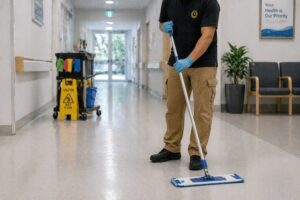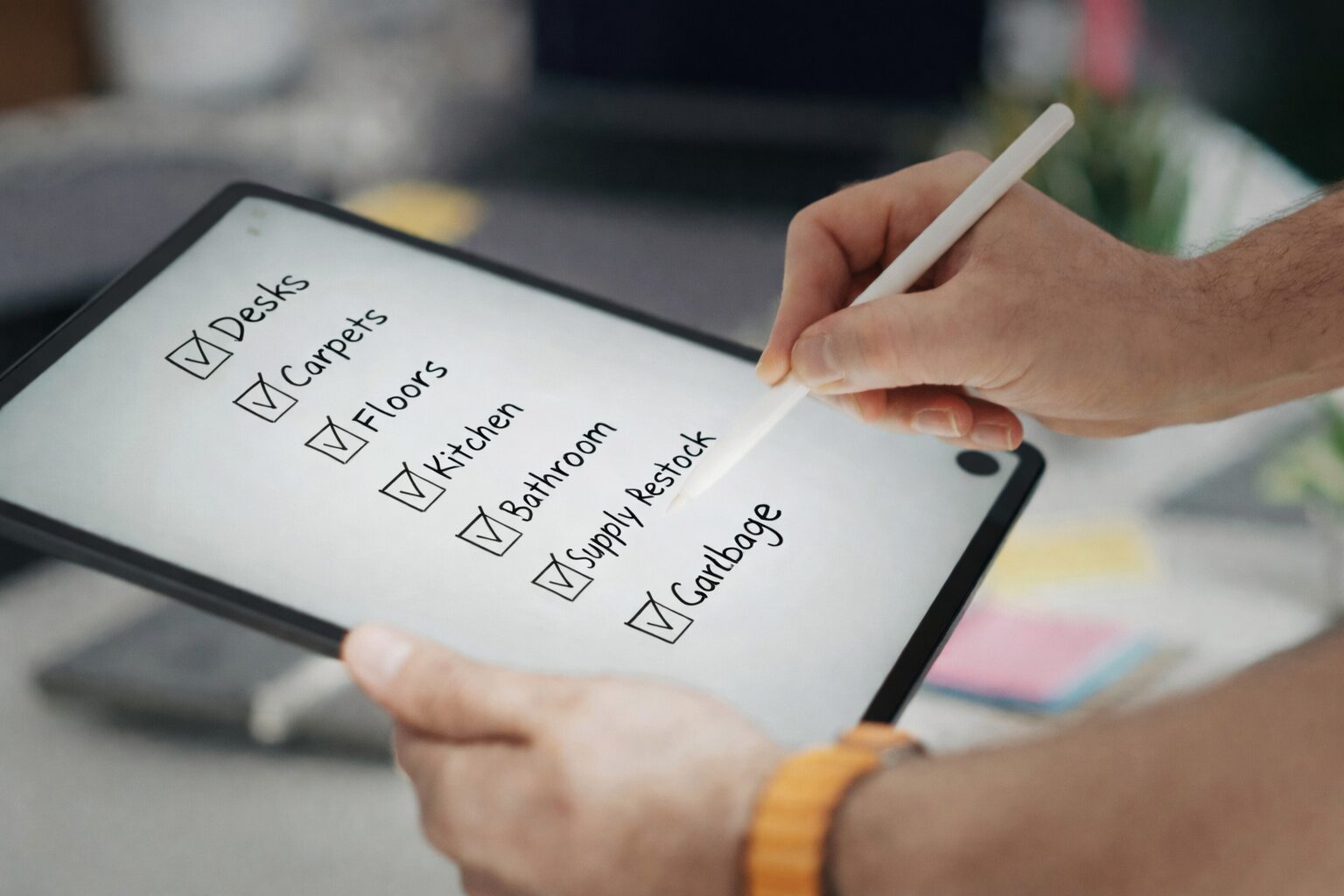
A clean office doesn’t happen by luck, it happens by routine. When your daily basics are covered and your deep cleans are scheduled, the whole workplace feels healthier, sharper, and easier to run.
Key Takeaways
- A practical checklist keeps your office consistently clean without relying on last-minute panic cleans.
- Split cleaning into daily, weekly, monthly and annual tasks so nothing gets missed.
- High-touch surfaces and shared tech need extra attention to reduce germs and downtime.
- If you want it done properly (and regularly), a professional team can take it off your plate.
A clean office isn’t about being “fancy”. It’s about walking in on a Monday morning and not feeling like you’ve entered a crime scene of crumbs, smudges, and that one suspicious smell nobody wants to claim.
It also helps your team stay healthier, work better, and feel proud of the space they spend a big chunk of their week in. This guide gives you a complete office cleaning checklist you can actually follow, plus a few practical tips to keep standards up without turning into the office cleanliness police.

Why a Cleaning Checklist Matters More Than You Think
Most offices don’t get messy overnight. It’s a slow build.
A coffee ring that never gets wiped. Dust is collecting on the skirting boards. The kitchen bin that’s “fine for now” until it suddenly isn’t. And before you know it, the place feels a bit grim, even if nobody can quite explain why.
The problem is that when cleaning is random or left to whoever notices it first, important tasks get skipped. Bathrooms get a quick wipe, but never a proper disinfect. Floors get vacuumed, but corners stay dusty for months. The kitchen fridge becomes a museum of forgotten lunches.
A checklist solves that by making cleaning:
- consistent
- easy to delegate
- easier to track
- less reactive and more routine
It also supports workplace wellbeing. A clean environment reduces distractions, improves comfort, and helps people feel like their workplace actually has standards.
If you want the bigger picture on how hygiene ties into focus and performance, this guide on office hygiene tips to boost productivity is a great read.
How to Use This Office Cleaning Checklist (Without Overcomplicating It)
Before we get into the tasks, here’s how to make this checklist work in real life.
Step 1: Match the checklist to your office
A small studio with 4 desks doesn’t need the same routine as a multi-floor corporate space. Adjust based on:
- staff numbers and foot traffic
- shared spaces (kitchen, meeting rooms, bathrooms)
- flooring type (carpet, tiles, timber, vinyl)
- whether staff hot-desk or have permanent workstations
- industry requirements (medical, childcare, corporate, retail admin, etc.)
Step 2: Assign responsibilities clearly
If everyone’s responsible, nobody’s responsible. Decide what’s handled by:
- staff (quick daily resets)
- facilities/admin (restocking basics)
- professional cleaners (everything else, especially deep cleans)
Step 3: Keep it visible
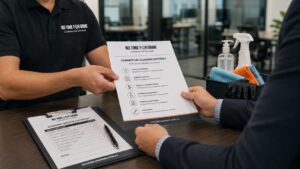
Print it. Pin it. Put it in a shared doc. Make it easy to follow.
Daily Office Cleaning Tasks (The Non-Negotiables)
Daily cleaning is about maintaining hygiene and keeping the office looking presentable. These are the tasks that stop mess building up into something much worse later.
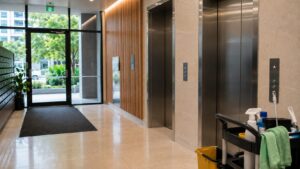
Reception and entry areas
- Empty rubbish bins and replace liners
- Wipe reception counters and shared surfaces
- Spot clean glass doors and fingerprints
- Sweep or vacuum entryways
- Quick check for dirt tracked in from outside
If clients walk in and the first thing they see is dusty corners and overflowing bins, it’s not exactly the best first impression.
Workstations and desk zones
- Remove rubbish and food packaging
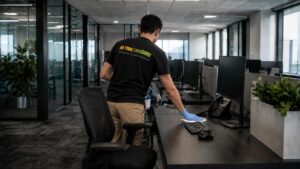
- Wipe desks, especially shared hot desks
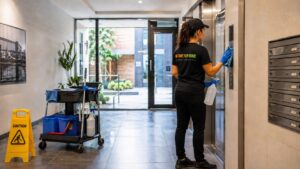
- Disinfect high-touch points like drawer handles and chair arms
- Straighten chairs and tidy cables where possible
This is also where a lot of “invisible grime” builds up. Desks might look fine until sunlight hits them, then suddenly, it’s fingerprints everywhere.
Meeting rooms
- Wipe tables and chair arms
- Remove cups, bottles, and used stationery
- Clean whiteboards (if used)
- Vacuum visible debris
Meeting rooms are often the cleanest space, until you look closely at the remote control and realise it’s basically a community petri dish.
Kitchen and break room
- Empty kitchen bins (food waste needs daily attention)
- Wipe benches, tables, and appliance handles
- Clean sink and tap area
- Sweep and mop floors
- Refill dish soap, hand soap, and paper towels
The kitchen is where things go downhill fast. A quick daily wipe saves you from the dreaded “why does it smell like that?” moment later in the week.
Bathrooms
- Clean and disinfect toilets and seats
- Wipe basins, taps, and counters
- Clean mirrors
- Mop floors with a suitable disinfectant
- Restock soap, paper towels, and toilet paper
Bathrooms don’t need to smell like a hospital, but they should feel fresh, stocked, and properly cleaned. Anything less and people notice.
Weekly Office Cleaning Tasks (Where the Real Difference Shows)
Weekly cleaning is what keeps an office feeling genuinely clean, not just “tidy enough”.
Floors and carpets
- Vacuum all carpeted areas thoroughly
- Mop hard floors with the right cleaning solution
- Spot clean stains and sticky patches
- Vacuum corners and edges (where dust loves to hide)
If you’re only vacuuming the middle of the room, you’re basically cleaning for appearances, not hygiene.
Desks, shelves and shared storage
- Dust surfaces properly, not just the obvious ones
- Wipe skirting boards in high-traffic areas
- Clean cabinet fronts and handles
Dust isn’t dramatic, but it adds up. And once it builds, it makes the whole office feel dull and tired.
Kitchen weekly deep clean
- Clean inside microwave (yes, even the splatter ceiling)
- Wipe fridge shelves and door seals
- Clean coffee machine area (drip trays, splash marks)
- Empty and sanitise the bin itself, not just the liner
A weekly fridge wipe can stop the slow creep into “what is that container and who owns it?” territory.
Bathrooms weekly deep clean
- Disinfect behind toilet bases and around edges
- Clean grout lines where grime builds up
- Scrub sinks and taps properly
- Deodorise drains if needed
This is the difference between a bathroom that looks clean and one that actually is clean.
Monthly Office Cleaning Tasks (The “We Forgot That Exists” List)
Monthly tasks stop dust, bacteria, and wear and tear from creeping in unnoticed.
Air vents and ventilation points
- Dust air vents and intake grilles
- Clean accessible filters if appropriate
- Check for dust build-up around vents
Vent dust is one of those things nobody sees until they do.
Walls, doors and touch-up cleaning
- Spot clean scuff marks and fingerprints
- Wipe door frames and edges
- Clean around light switches and handles
Light switches are high-touch, but they’re rarely cleaned properly. The same goes for door handles and cupboard pulls.
Glass and partitions
- Clean internal windows and glass walls
- Remove smears and streaks from partitions
Glass makes offices look modern and sharp. Dirty glass makes everything look slightly neglected.
Furniture and upholstery
- Vacuum fabric chairs and sofas
- Wipe chair bases and legs
- Clean under seating in waiting areas
Upholstery quietly collects dust, crumbs, and whatever that mysterious fluff is.

Quarterly and Annual Cleaning Tasks (The Proper Deep-Clean Cycle)
These tasks aren’t needed weekly, but skipping them for too long makes everything feel grim, even if it’s technically “clean enough”.
Quarterly cleaning tasks
- Deep carpet clean (steam clean or extraction)
- Clean internal windows thoroughly
- High dusting (tops of shelves, ledges, storage units)
- Detail clean skirting boards and corners
Annual cleaning tasks
- External window cleaning (where safe and accessible)
- Pressure clean outdoor entryways and paths
- Deep clean walls in high-contact areas
- Review your cleaning plan and update what’s not working
A good rule is this: if your office has grown, changed layout, or has more staff than last year, your cleaning routine should grow too.
Deep Cleaning vs Regular Cleaning (What’s the Difference?)
Regular cleaning is your baseline. It keeps things neat and stops daily grime from taking over.
Deep cleaning goes further. It targets:
- hidden dust build-up
- hard-to-reach areas
- stubborn bathroom grime
- carpet contamination and odours
- detailed sanitisation of neglected spots
Deep cleans are especially useful after:
- a busy season or major project period
- office renovations or building works
- illness spikes across the team
- events, client visits, or staff functions
It’s also worth remembering that workplace cleanliness isn’t just about looks. It’s part of providing a safe and healthy environment, which aligns with general workplace responsibilities under Australian safety expectations. For broader workplace guidance, Safe Work Australia is a reliable reference point.
The Office Cleaning Responsibility Matrix (So Everyone Knows What’s What)
This is the part that stops cleaning from becoming a silent office war.
Here’s a simple way to split tasks so it doesn’t fall on one person who “just cares more”.
| Task Type | Staff Daily Reset | Admin/Facilities | Professional Clean |
| Desk rubbish and personal food mess | ✅ | ||
| Kitchen dishes and basic wipe down | ✅ | ||
| Restocking supplies | ✅ | ||
| Bathrooms (proper disinfect and mop) | ✅ | ||
| Floors (vacuum and mop) | ✅ | ||
| Monthly detail cleaning | ✅ | ||
| Carpet deep cleaning | ✅ |
It’s not about being strict. It’s about keeping the office functional without resentment building up.
Office Technology Cleaning (The Most Overlooked Hygiene Risk)
If your office is full of shared tech, it needs its own mini-checklist.
Think about how often people touch:
- keyboards
- mice
- desk phones
- touchscreens
- printers and scanners
- meeting room remotes
Now think about how rarely those items get cleaned properly. Tech gets grimy fast, and it’s not just a hygiene issue. Dust and grime can affect performance and lifespan, too. If you want a practical guide for doing it safely, this post on cleaning your office technology regularly is the perfect add-on to your cleaning plan.
Simple monthly tech cleaning checklist
- Power down devices (where possible)
- Use a microfibre cloth (not a paper towel)
- Apply cleaner to the cloth, not directly onto the device
- Focus on keys, buttons, touchpoints, and edges
- Let surfaces dry fully before use
A Quick Office Cleaning Inspection Checklist (For Quality Control)
Even if you’ve got a great routine, standards can slip over time. A simple inspection helps keep things consistent.
Monthly inspection questions
- Are bathrooms clean, stocked, and odour-free?
- Are floors clean in corners and under furniture?
- Are high-touch surfaces visibly clean and sanitised?
- Is the kitchen hygienic, including sinks and appliances?
- Are meeting rooms ready for clients at any time?
You can keep it simple with a quick rating:
- Pass
- Needs attention
- Fix ASAP
It’s not about nitpicking. It’s about catching small issues before they become permanent.
Final Thoughts
A checklist is brilliant, but it still needs someone to actually do the work. If your team is busy, your office is high-traffic, or you just want consistent results without chasing it every week, professional cleaning support is the easiest way to keep standards high.
If you want your office to feel fresh, hygienic, and client-ready every single day, book a tailored clean through NTFG’s professional office cleaning service. That’s the fastest way to get a workplace that looks sharp, feels better to work in, and stays that way.